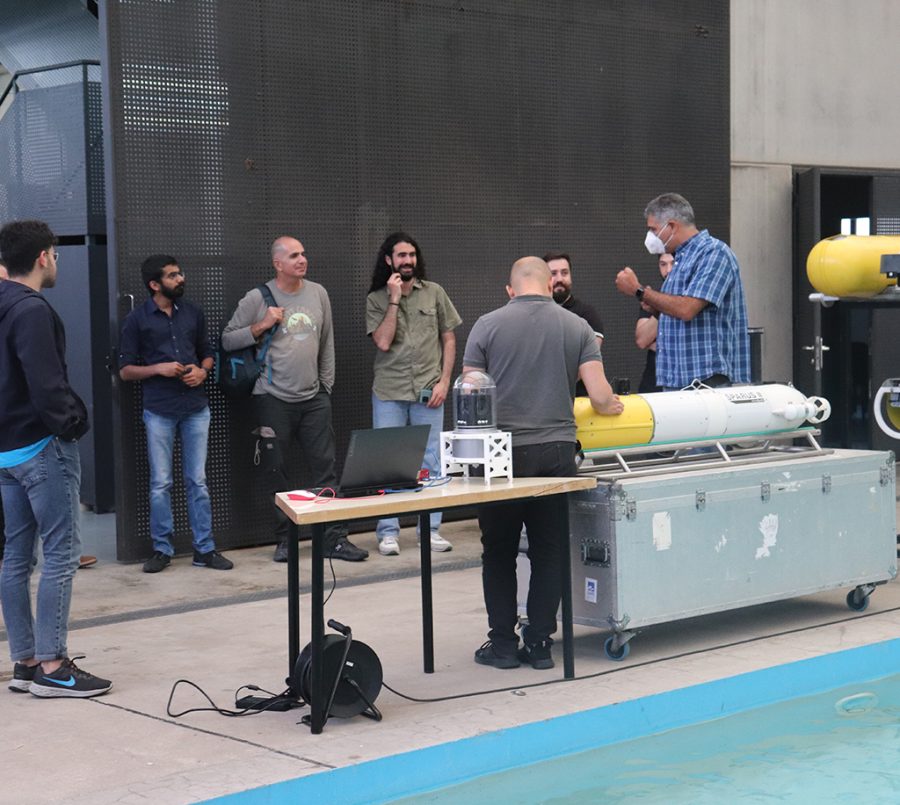
euRathlon is a new outdoor robotics competition which invites teams to test the intelligence and autonomy of their robots in realistic mock emergency-response scenarios.
Inspired by the 2011 Fukushima accident, the euRathlon competition will require a team of land, underwater and flying robots to work together to survey the scene, collect environmental data, and identify critical hazards. Leading up to this ‘grand challenge’ in 2015, will be directly related land and underwater robot competitions in 2013 and 2014, respectively. The euRathlon competitions will be supported by annual workshops for competitors. In parallel, there will be an open process of developing benchmarks to allow comparison of different robots in the euRathlon competitions.
Linked public engagement activities will connect euRathlon with robotics research, industry and emergency services, as well as the general public. Attendance of spectators will be welcomed, and we hope that euRathlon events will attract considerable press and media attention. By targeting a specific and urgent need – intelligent robots for disaster-response – euRathlon will provide European robotics with a platform for challenging, extending and showcasing European cognitive robotics technologies.
The euRathlon consortium has been awarded funding, to create and run the competitions and workshops, by the European Commission under its Seventh Framework Programme for Research (FP7).
Text from: euRathlon website