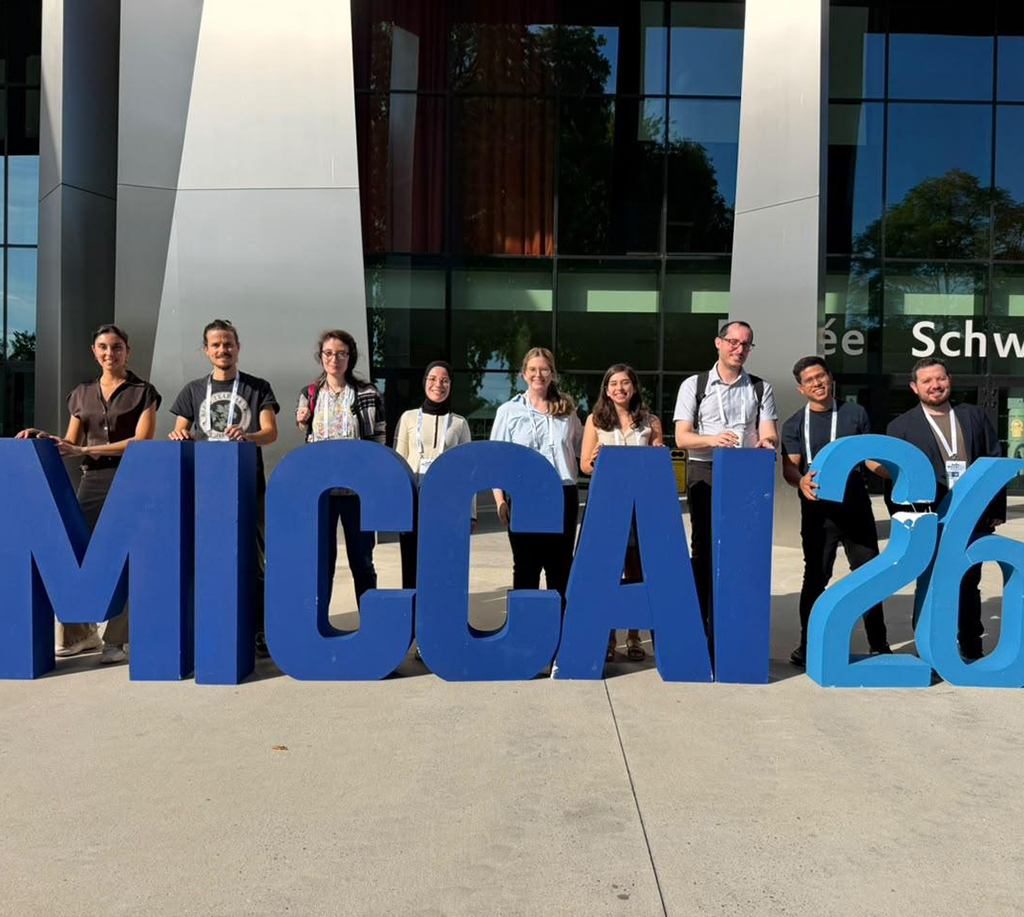
The group’s contributions to the international conference included a spotlight presentation on automated skin lesion detection, scientific poster presentations and involvement in activities supporting the research community.
The 29th edition of the International Conference on Medical Image Computing and Computer Assisted Intervention (MICCAI) took place in Strasbourg, France, from the 27th of September to the 1st of October 2026. The conference brings together international researchers, engineers and clinicians working at the intersection of artificial intelligence, medical imaging and biomedical engineering.
Several members of ViCOROB participated in this year’s edition, contributing to scientific presentations and activities within the international research community. Their participation covered different aspects of medical image computing, from automated lesion detection to research on medical image simulation and synthesis.
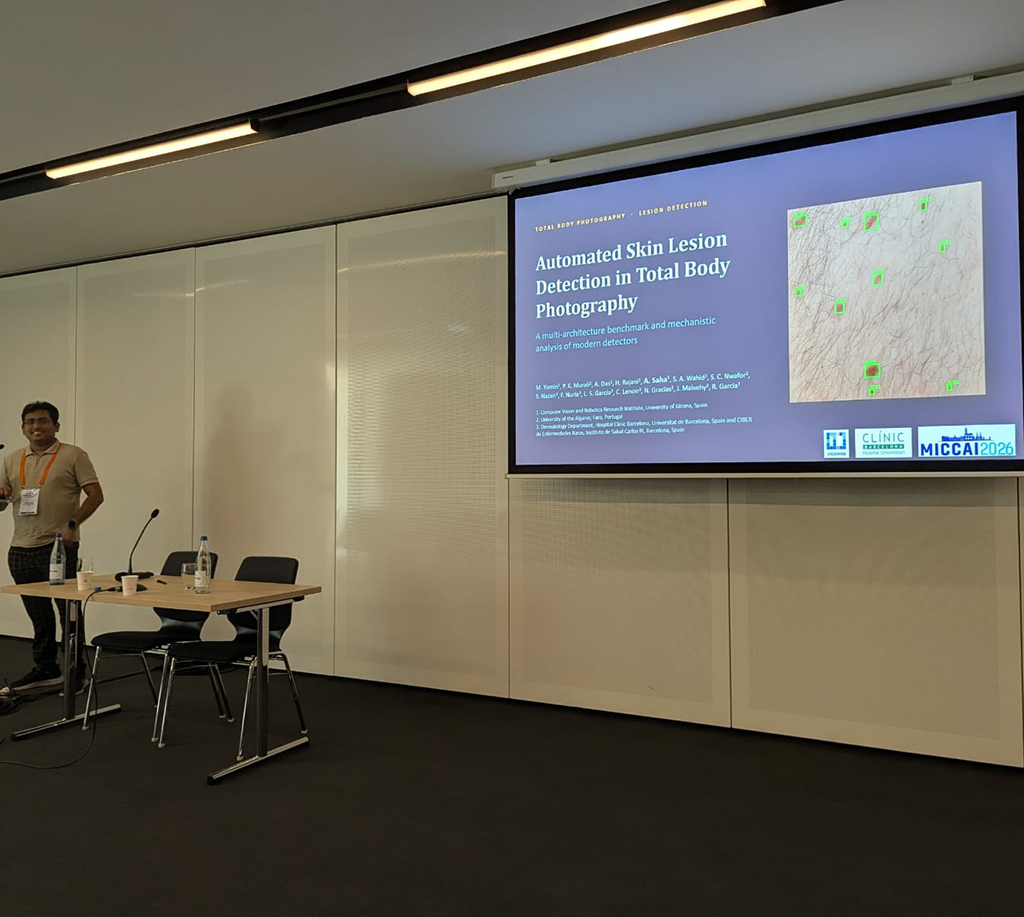
Automated skin lesion detection
Anup Saha presented the work entitled “Automated Skin Lesion Detection in Total Body Photography: A Multi-Architecture Benchmark” (Yamin, M. et al.) as a spotlight, at the ISIC workshop held in conjunction with MICCAI 2026.
The study is part of the European project iToBoS (Intelligent Total Body Scanner for Early Detection of Melanoma), coordinated by Prof. Rafael Garcia (ViCOROB). It addresses the automated detection of skin lesions in total body photography, an approach that involves analysing images covering the entire body to support the assessment of skin lesions. The research compares different model architectures to evaluate their performance in this task.
Contributions to the international research community
ViCOROB’s participation also involved scientific activities beyond the presentation of research findings, including contributions to conference sessions and initiatives within the MICCAI community.
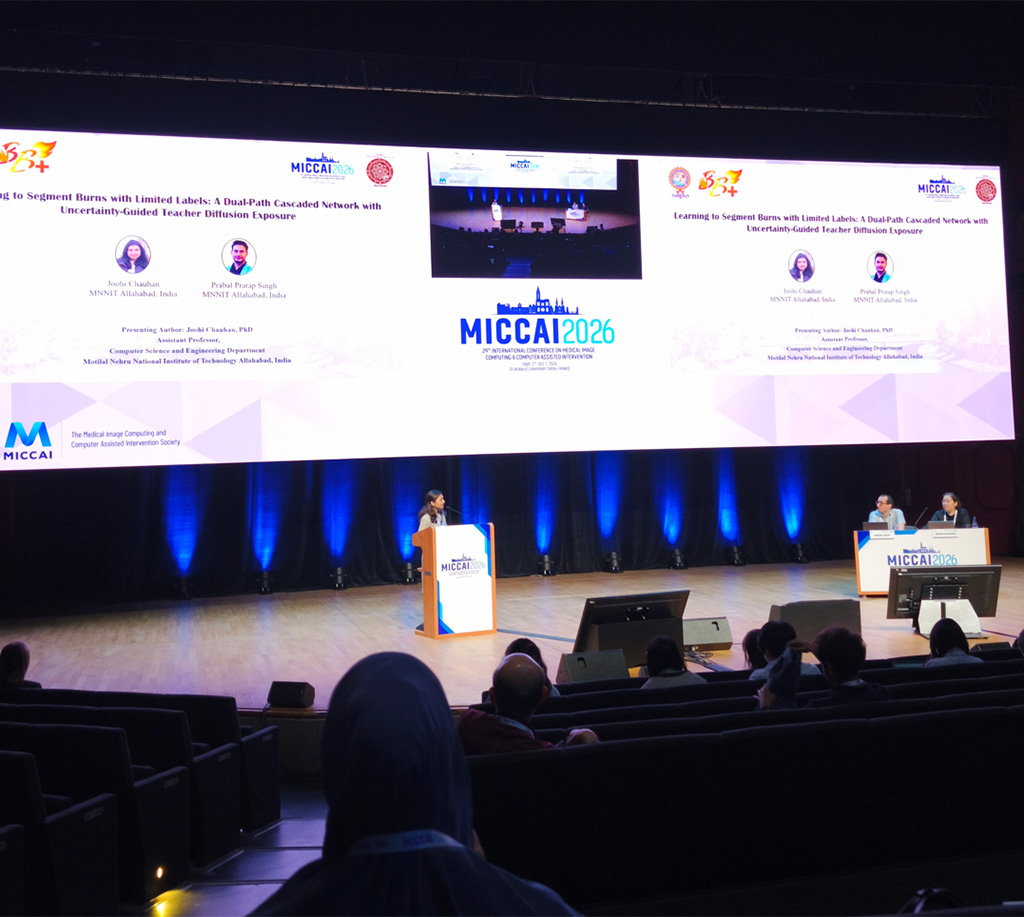
Mariano Cabezas Grebol served as Session Chair for the 05A oral session titled Image Segmentation III from the main conference. The session focused on different segmentation approaches, including contributions based on foundation models. Together with Neslihan Bayramoglu, they introduced all 5 speakers and mediated during the Q&A after the presentation. He was also part of the organizing committee for the Ischemic Stroke Lesion Segmentation Challenge (ISLES’26), which focuses on the segmentation of lesions associated with ischaemic stroke and was held on the first day of the satellite events. During the satellite events, he also volunteered with the RISE ambassador program to present two posters for authors that could not attend the conference.
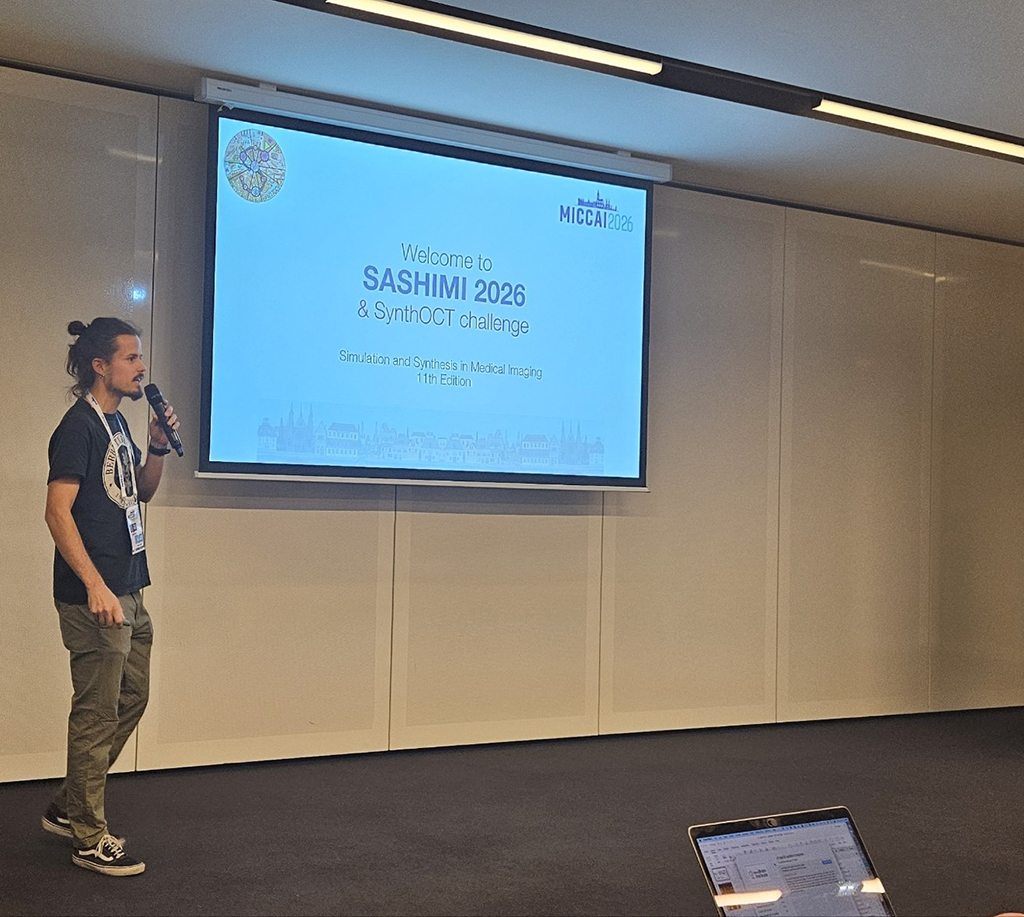
Adrià Casamitjana Díaz was a member of the organising committee for the 11th edition of the Simulation and Synthesis in Medical Imaging (SASHIMI) workshop, which focuses on research into the simulation and synthesis of medical images. A total of 36 out of 57 outstanding contributions were presented during the workshop, with focus on advances in image-to-image translation and image synthesis as well as discussion on the downstream applications of generative models.
Scientific posters and ongoing research
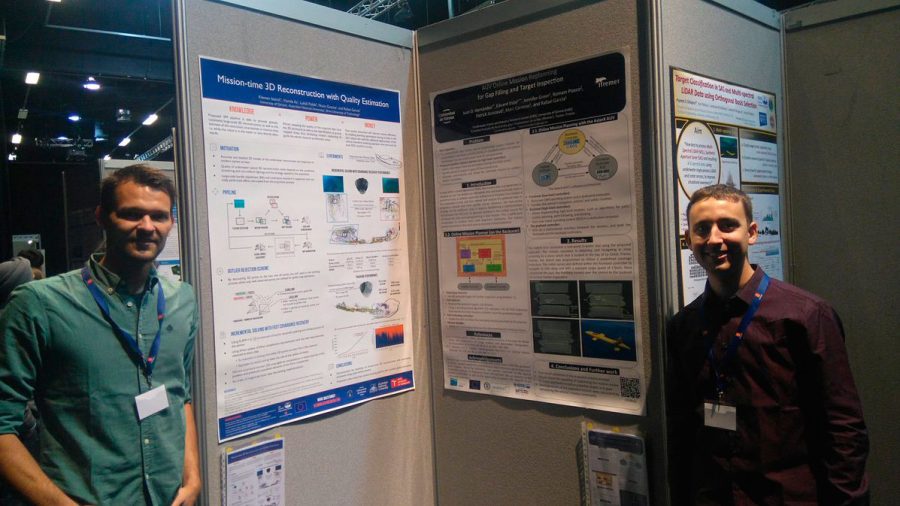
Poster sessions provided an additional opportunity to present research and exchange ideas with the international scientific community. Hasna R. Hamadache, Agustin Cartaya Lathulerie and Hadeel Awwad presented posters showcasing their ongoing research.
– A. Cartaya et al., Latent Conditional Rectified Flow for MRI Synthesis Across Modalities and Field Strengths in the MRIxFields2026 Challenge.
This work explores the consistent translation across scanners of different quality, improving the generalizability of downstream tasks such as image segmentation across hospitals.
– R.E. Hamadache et al., nnU-Net and Domain Randomization for Automated Segmentation of Moderate-to-Severe Traumatic Brain Injury.
This work studies the use of synthetic data to complement real cases in small sample size studies, improving the performance in small lesion detection.
Advancing research in medical image computing
The presence and active participation of ViCOROB members at MICCAI 2026, the leading international conference on medical image computing, reflects the quality of research conducted in our group. It has provided a unique opportunity to network, exchange ideas, and connect with frontier research labs in the field.
The current focus of the community is on learning robust and generalizable representations that deliver practical clinical value. This aligns closely with our work at ViCOROB: building generalizable normative models, leveraging domain randomization and image synthesis to train robust segmentation and registration architectures, and integrating longitudinal data to enrich clinical findings. As the MICCAI community gradually shifts toward world models, ViCOROB is well positioned to lead and contribute to this evolving paradigm.