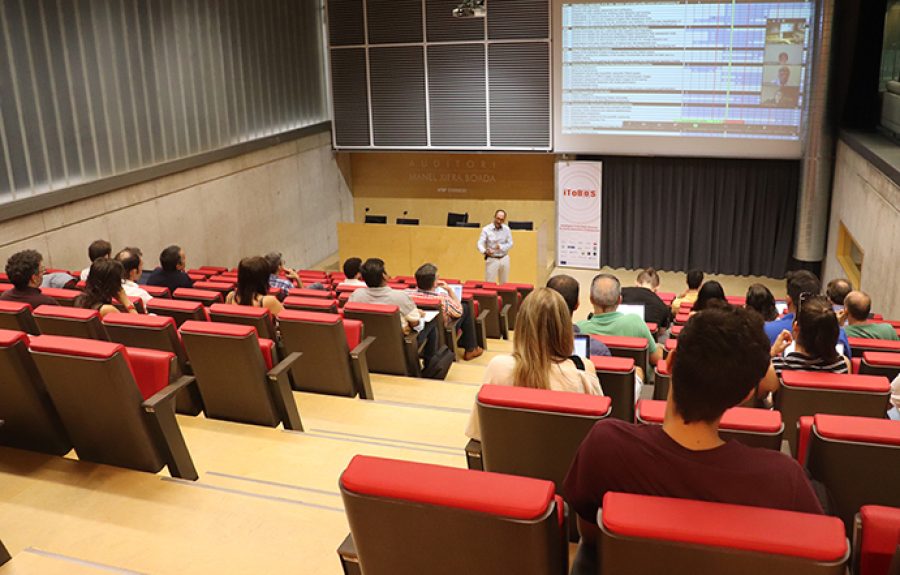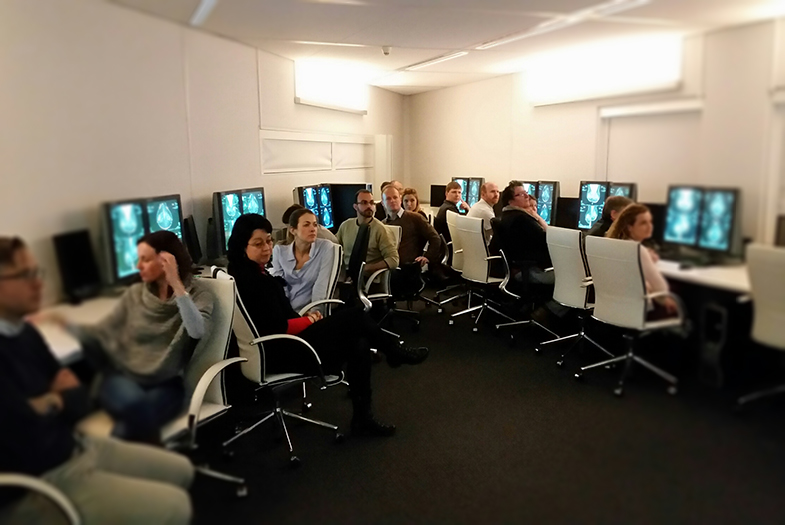
Last week, the member of the Image Analysis Laboratory Oliver Diaz attended the training course “Achieving Quality in Diagnostic and Screening Mammography” as part of his Marie Sklodowska-Curie fellow. This course, the 8th within the EUTEMPE·RX series for medical physics experts, was held at the Dutch reference centre for mammography screening (LRCB), Nijmegen, The Netherlands.
During 5 days, all attendees got an overview of a number of breast imaging technologies from a range of specialists: medical physicists, epidemiologists, CAD engineers, radiologists and radiographers. Several topics were covered, such European protocols to measure image quality for mammography and breast tomosynthesis, estimation of breast dose during the X-ray mammography procedures, avoid image artefacts, etc. It was a very successful course as Oliver commented: “I found this training course very useful. Now I can understand much better the entire breast cancer screening workflow and identify what needs to be improved. I will definitely use all this new knowledge for my research within the SCARtool project”.
SCARtool: https://vicorob.udg.edu/portfolio_page/scartool/
LRCB: http://www.lrcb.nl/en
EUTEMPE·RX: http://eutempe-rx.eu/