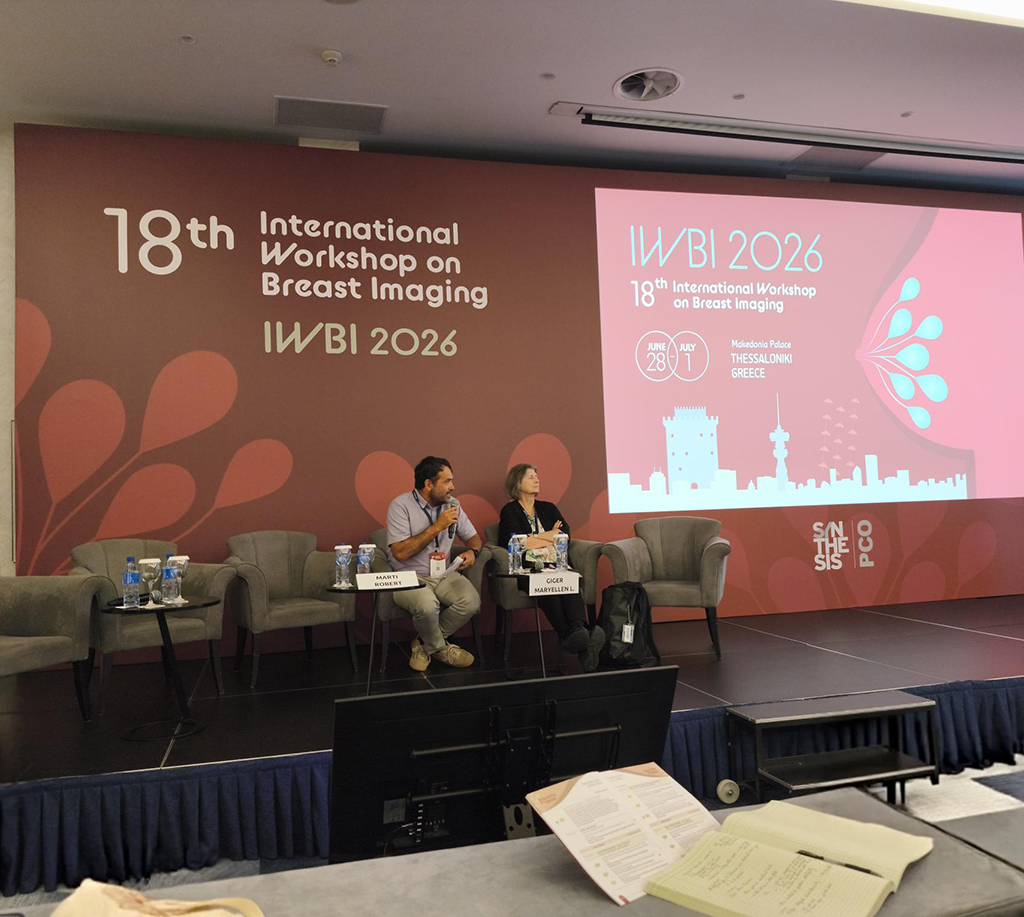
Researchers from ViCOROB presented their latest advances in breast cancer research and medical image analysis at the 18th International Workshop on Breast Imaging (IWBI 2026), held recently in Thessaloniki. IWBI is a leading international forum for scientists, clinicians, and industry innovators focused on breast imaging modalities.
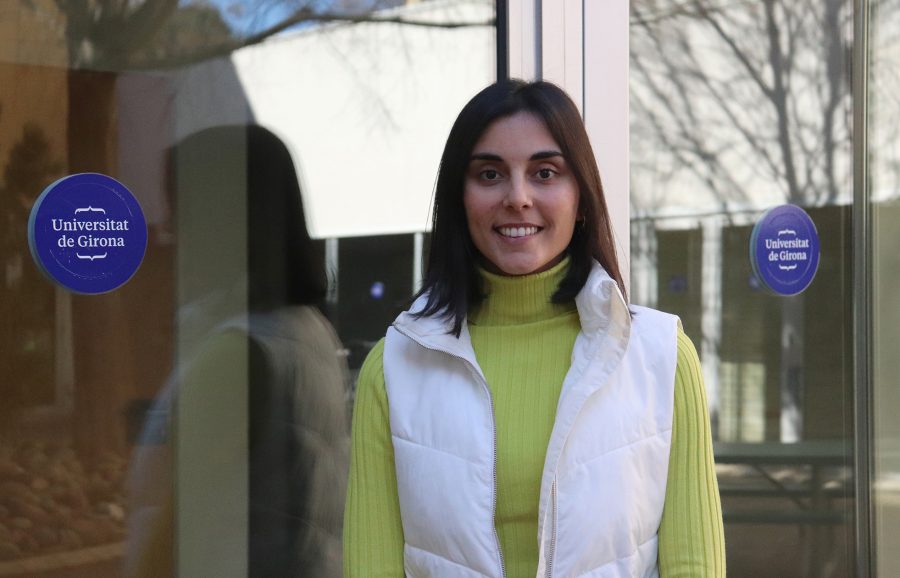
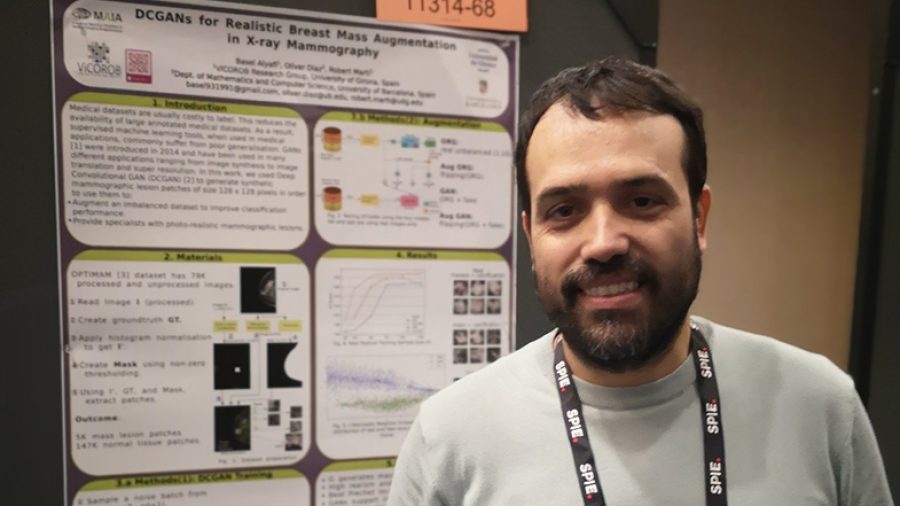
The delegation from the Medical Imaging Lab included Dr. Robert Martí, who served as a member of the workshop committee and chaired a scientific session, alongside PhD candidates Hadeel Awwad and Enric Sena. The workshop provided a valuable platform for the team to engage with international imaging peers, including newly onboarding researchers like Enric.
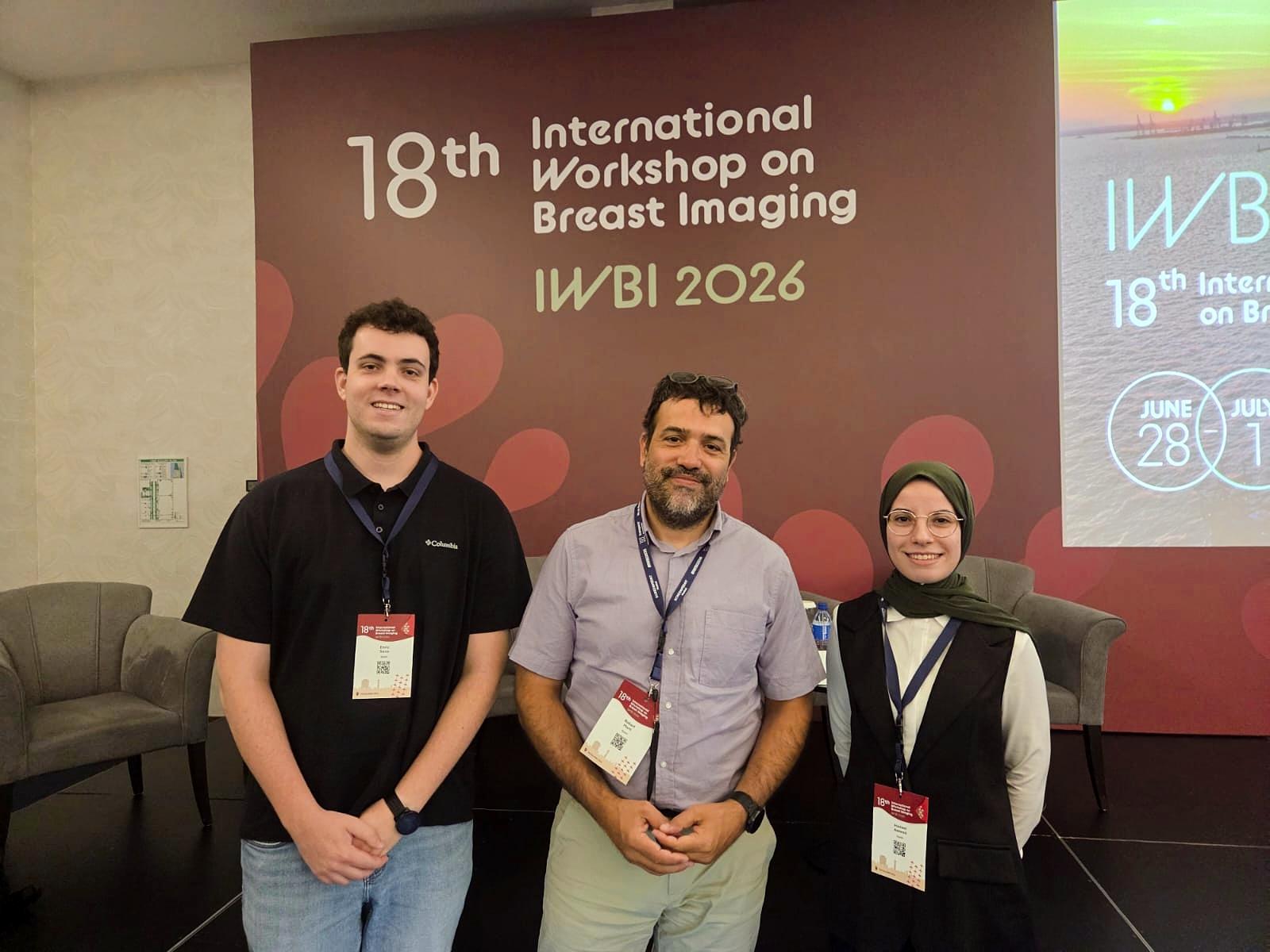
The work presented falls under the framework of the IMPACT project, which leverages deep learning to drive innovation in image analysis, optimize lesion detection, and advance treatment response prediction to promote personalized healthcare outcomes.
PhD candidate Hadeel Awwad presented a poster detailing preliminary results on predicting pathologic complete response (pCR) from Breast MRI using the multi-centre MAMA-MIA dataset. To find the configuration with the highest discriminative power, the study conducted a systematic evaluation of 78 different radiomics configurations spanning spatial regions—specifically comparing the primary tumour and a peritumoural ring—as well as temporal representations and mathematical transforms.
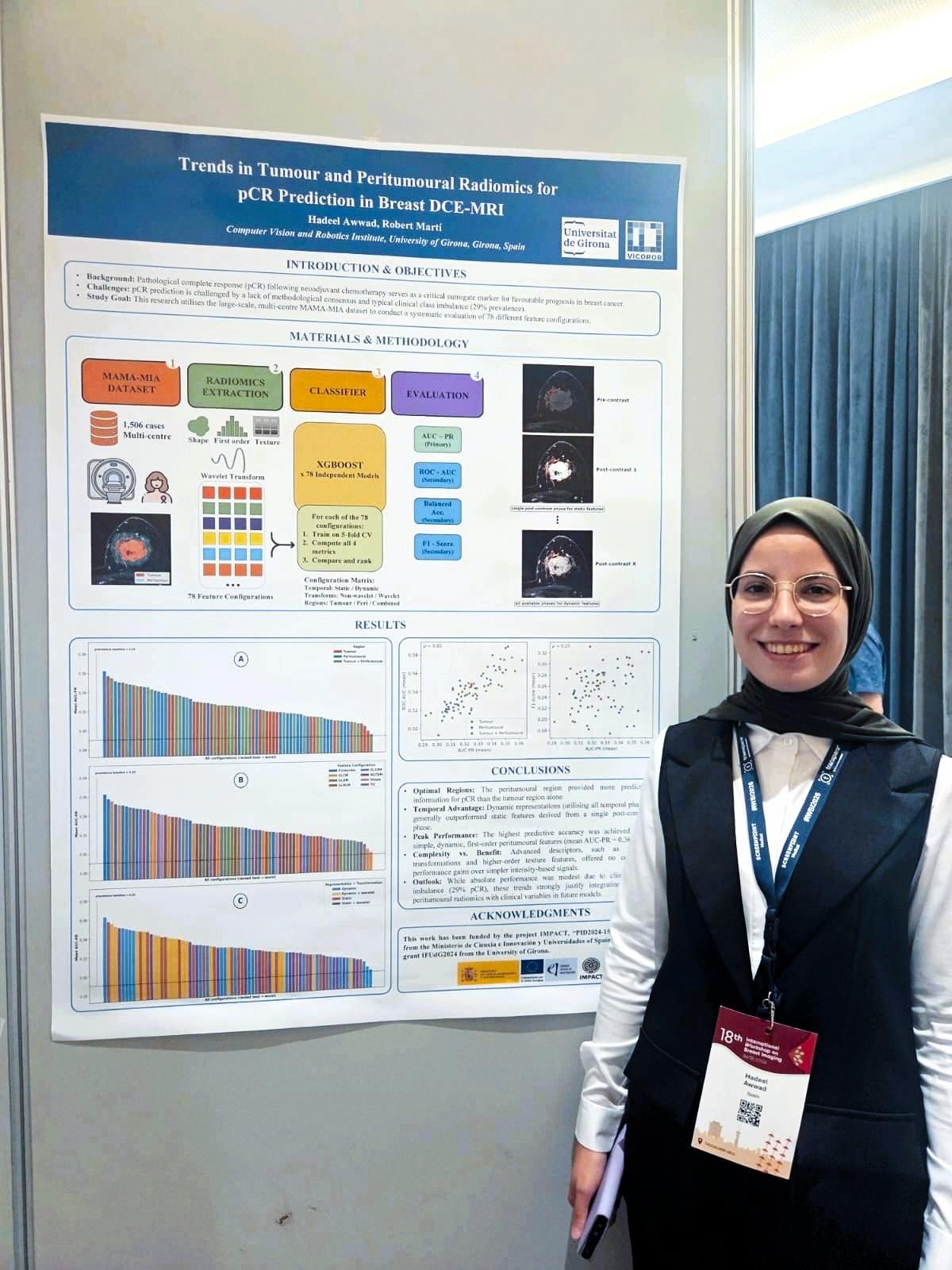
The preliminary findings revealed that simple, dynamic, first-order peritumoural signals consistently achieved the highest classification accuracy, outperforming static or purely intratumoural features. These results justify integrating these localized temporal variables into future comprehensive models to improve treatment response prediction.
Beyond the scientific presentations, the workshop served as an excellent venue for strengthening ties within the international breast imaging community. The team took advantage of the event to establish new collaborations and lay the groundwork for future joint research initiatives with European and international partners.
This work has been funded by the IMPACT project from the Ministerio de Ciencia e Innovación y Universidades of Spain, and the PhD grant IFUdG2024 from the University of Girona.